FAQs FOR CLIENTS
What does an applied behavioural scientist do in an organisational context?
1
I work on behaviour change at a group and system level, not in a therapeutic or one-to-one setting. The focus is on understanding how environments, incentives, norms, and processes shape behaviour in organisations.
Typical questions include:
• How can employees be supported to behave in a more cyber-secure way?
• What can managers do to better support the mental health of their teams?
• How can sustainable practices become the default rather than the exception?
The work involves identifying behavioural drivers, designing interventions, and evaluating impact.
What kinds of challenges do you work on?
2
Projects typically involve organisational behaviour, sustainability, digital behaviours, cybersecurity, finance, innovation, health and well-being, and workplace practices.
How do projects usually start?
3
Most collaborations begin with a short exploratory conversation to clarify the challenge and context. Sometimes what appears to be a strategic or operational issue is fundamentally behavioural. In practice, nearly every organisational challenge involves behaviour in some way.
If it is a behavioural challenge, I put together a proposal tailored to your goals and constraints.
How is behavioural science different from other change approaches?
4
Behavioural science focuses specifically on understanding and influencing behaviour.
Many change initiatives concentrate on strategy, communication, or policy. Behavioural science asks a more targeted question: what is driving the behaviour in this context, and how can we change it systematically?
This involves identifying capability, opportunity, and motivation barriers, mapping behavioural systems, and designing interventions that alter environments, incentives, norms, or processes — not just awareness.
The aim is to move beyond good intentions or information campaigns and create conditions where the desired behaviour becomes easier, more likely, and more sustainable.
What kinds of projects do you take on?
5
The scope can range from a few hours - such as a workshop, talk, or behavioural audit - to longer-term consulting engagements involving research, intervention design, and evaluation over several months.
Projects are adapted to the scale and needs of the organisation.
How do you measure impact?
6
Impact is assessed through both process and outcome evaluation.
This means examining not only whether an intervention worked and connecting them to existing KPIs, but how and why. Depending on the project, this may involve surveys, interviews, behavioural data, experiments, observation, or mixed-method approaches.
Who do you typically work with?
7
I collaborate directly with organisations of different sizes, from early-stage start-ups to multinational corporations.
I also frequently partner with consultancies and agencies as an independent behavioural science specialist.
Do you work internationally?
8
Yes. I work primarily remotely and collaborate with organisations across different countries.
I am based between Berlin and New York and have the right to work in the EU, UK, and the US.
Do you work on an hourly rate or project basis?
9
I typically work on an hourly basis to allow flexibility and transparency.
For clearly defined scopes, project-based agreements are also possible. The structure is discussed and agreed upon at the outset.
Do you sign NDAs?
10
Yes. I regularly work under confidentiality agreements.
Additional resources
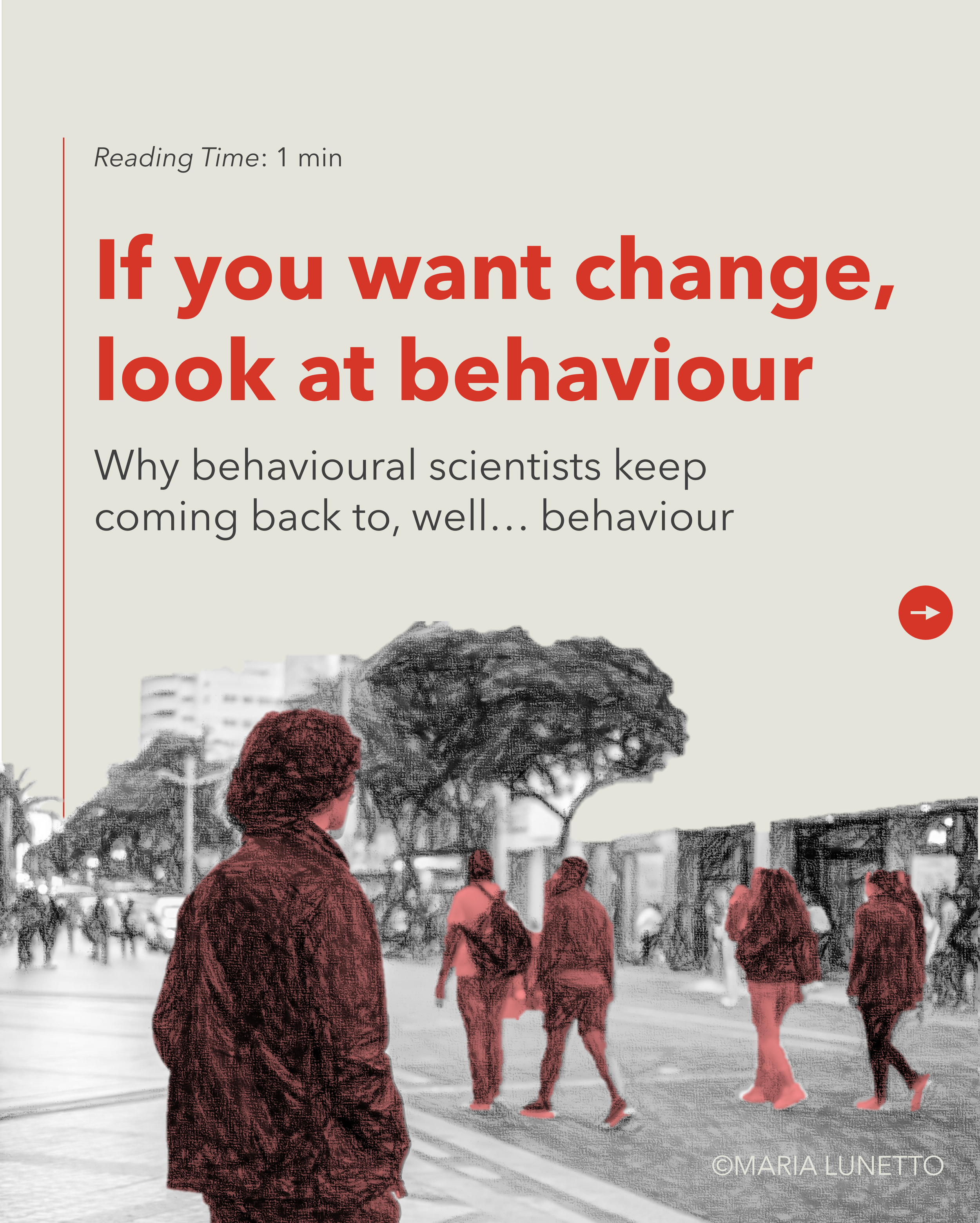
FAQs for Early-Career Behavioural Scientists
How do you find clients as an independent behavioural scientist?
1
For me, building a professional presence on LinkedIn has been important. It makes your work visible and helps people understand what you actually do.
At the same time, much of my work comes from previous roles and long-term professional relationships. Having worked in academic and consultancy settings gave me a strong network, and I still collaborate with organisations and agencies I’ve worked with before.
Relationships tend to compound over time. Early on, visibility and credibility matter most.
How can I show behavioural science expertise if I don’t have much experience yet?
2
Everyone starts somewhere. What matters is being able to demonstrate how behavioural science creates value. This could mean:
• Doing a small pro bono project
• Conducting a behavioural audit of an existing website or service
• Designing a mock intervention and clearly explaining your reasoning
• Applying behavioural frameworks within your current role
If you are already employed, you might explore whether your organisation would be open to integrating behavioural frameworks into ongoing projects. Applied experience, even on a small scale, builds credibility.
Should I specialise or stay broad?
3
A strong methodological foundation is more important than early specialisation. Understanding behavioural frameworks, research design, and evaluation will serve you in any context.
For some, specialising happens naturally. For example, if you have a background in HR, finance, or sustainability, it can be powerful to become “the behavioural scientist who works on X.”
I have chosen a broader path, working across sectors, and that has worked for me. There is no single correct strategy, it depends on your interests, strengths, and opportunities.
Can early-career behavioural scientists reach out?
4
Yes. While I cannot always offer mentorship, I am open to thoughtful messages and occasional conversations about the field.
What frameworks and methodologies guide your work?
5
Farmeworks, models, and tools:
• The COM-B model
• The Behaviour Change Wheel (BCW)
• The Theoretical Domains Framework (TDF)
• The Behaviour Change Techniques Taxonomy (BCTTv1)
• APEASE criteria
Research and Analysis Methodologies:
• Desk research and literature reviews
• Mixed-methods research (surveys, interviews, observation)
• Behavioural systems mapping
• Thematic analysis and triangulation
• Co-creation workshops
• Prototyping and iterative testing
Additional resources